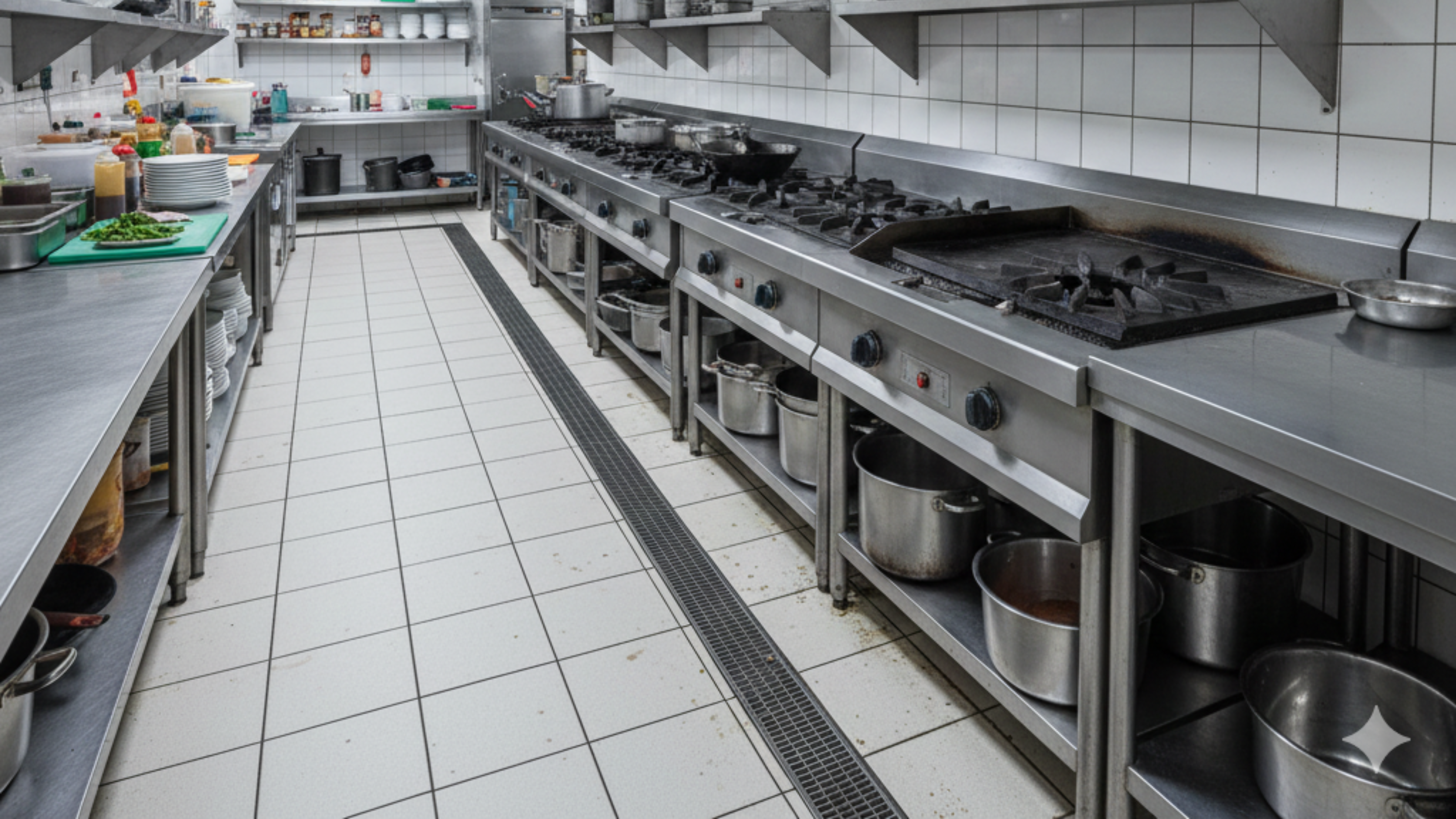
When a Kitchen Is Not Safe-to-Work
Most kitchens appear operational until an audit, incident, or inspection exposes what was missed.
WHAT FAILURE ACTUALLY LOOKS LIKE
- Regulatory fines or immediate shutdowns
- Suspension or revocation of HALAL certification
- Rejection of GMP, HACCP or ISO applications or renewals
- Loss of brand credibility and customer trust
- Operational disruption and financial exposure
The Safe-to-Work Check reveals whether your kitchen can continue operating responsibly before audits, incidents or enforcement actions make the decision for you.
6 Critical Risk Areas That Determine Safe-to-Work Status
These are the areas where safety, hygiene and audit failures most commonly occur in commercial kitchens.
Flooring System
• Slip resistance and surface integrity
• Cracks, joints and contamination points
Drainage and Water Control
• Trap location and accessibility
• No blockage, backflow or stagnant water
Ventilation and Airflow
• Exhaust hood and filter performance
• Smoke, heat and odour control
Walls, Coving and Ceiling Integrity
• Cleanable, sealed surfaces
• No moisture ingress, mould or open joints
Cold Room and Temperature-Controlled Areas
• Condensation, leakage and frost control
• Insulation integrity and temperature stability
Hygiene Control and Pest Exposure
• Workflow cleanliness and waste handling
• No pest access points or visible traces
Safe-to-Work Result
Based on the conditions observed across these 6 critical risk areas, your kitchen receives a Safe-to-Work Score (0–100) indicating whether it can continue operating responsibly.